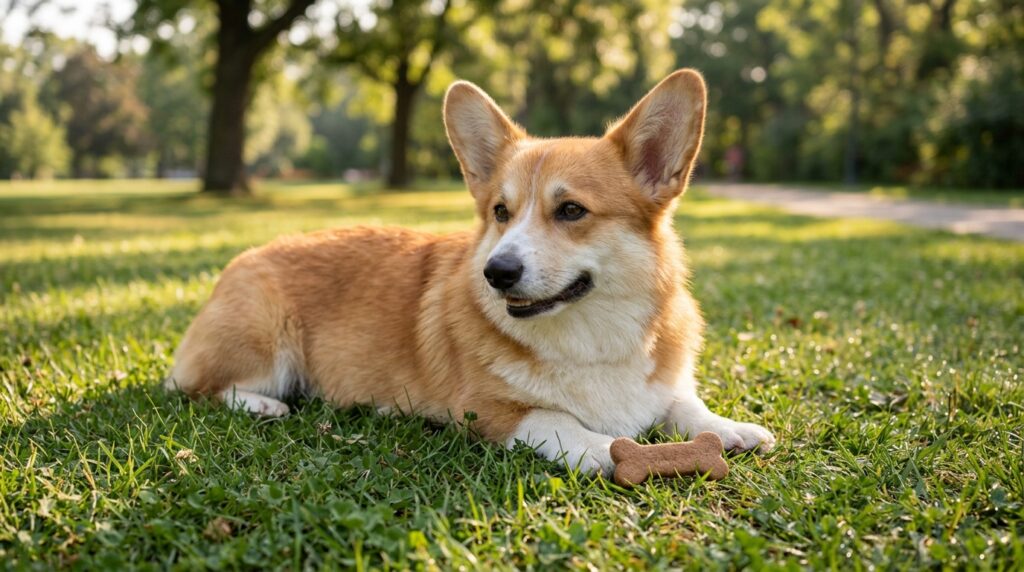
A Chihuahua and a Great Dane can share a couch, a birthday party, and a bag of treats. They cannot share the same amount of anything else.
Body size shapes how a dog handles food, medication, and supplements. A piece that is a snack for one animal can be a full meal for another, and the gap grows when the treat contains an active compound.
CBD dog treats are sold in a handful of standard sizes, usually built for an average dog. That leaves owners of very small, very large, young, or old dogs doing some extra math. The sections below cover weight-based dosing, calorie limits, treat shape and choking risks, and the questions that matter at each life stage.
Why Weight Changes the Equation
Dosing by Kilogram
Veterinary research on cannabidiol states doses in milligrams per kilogram of body weight, and the reason is simple. The same amount of a compound spreads across a larger body in a big dog, and it concentrates in a small one. The 2018 Cornell University trial in Frontiers in Veterinary Science gave dogs with osteoarthritis 2 mg per kilogram twice daily. A 5-kilogram dog on that plan would get 10 mg per dose, and a 40-kilogram dog would get 80 mg.
No approved dose exists for any condition, because the FDA has not approved a CBD product for animals. The trial numbers show scale, nothing more, and any amount a dog actually receives should come from a veterinarian who knows the animal.
THC Hits Small Dogs Harder
Full-spectrum treats can carry trace THC, and the 2018 Farm Bill allows hemp with up to 0.3 percent delta-9 THC by dry weight. Dogs respond to THC more strongly than people do. A small dog that eats the same number of treats as a large dog takes in far more THC per kilogram of body weight. A 2012 review from Colorado State University, led by Stacy Meola and published in the Journal of Veterinary Emergency and Critical Care, covered 125 dogs with marijuana toxicosis, and it recorded two deaths linked to edibles made with concentrated butter.
For toy and small breeds, broad-spectrum or isolate products with THC reported as non-detected add a margin of safety. A lab report should confirm the figure.
Calories by Size
Treat calories matter more for small dogs than most owners expect. Veterinary nutrition sources estimate a dog’s resting energy requirement with a formula: 70 times body weight in kilograms raised to the power of 0.75. A typical neutered adult needs about 1.6 times that figure.
| Dog weight | Resting energy | Approximate daily need | Treat allowance (10%) |
|---|---|---|---|
| 5 kg | about 235 kcal | about 375 kcal | about 37 kcal |
| 10 kg | about 395 kcal | about 630 kcal | about 63 kcal |
| 20 kg | about 660 kcal | about 1,060 kcal | about 106 kcal |
| 30 kg | about 900 kcal | about 1,435 kcal | about 143 kcal |
These are estimates, and activity, age, and body condition move them up or down. A veterinarian can tune the number. A 5-kilogram dog that receives three 15-calorie treats has already used more than the 10 percent allowance, and the Association for Pet Obesity Prevention found in 2022 that 59 percent of U.S. dogs were overweight or obese. For small dogs, treat strength and treat calories should both be low.
Matching by Size Category
Toy and Small Breeds
Small dogs live longer and tend to carry dental disease, so soft treats that crumble easily suit them. Treat pieces should be tiny, since a hard chunk can choke or lodge in a small throat. Look for products with low milligrams per piece, which allow fine adjustment. A bag with 2 to 5 mg per treat is easier to work with than one with 25 mg chews that need cutting.
Storage deserves attention. A toy dog that finds an open bag can eat a large share of its body weight in treats, and a small animal has less room for error.
Medium Breeds
Medium dogs sit in the middle of the standard product range, which makes shopping easier. A treat of 5 to 10 mg and a normal chew size fit this group without much adjustment. Dosing still follows weight, and a 12-kilogram dog and a 25-kilogram dog need different plans.
Large and Giant Breeds
Big dogs need more of everything, and the bill climbs. A dog in the 40-kilogram range can need many standard-size treats to match a study-level dose, which adds calories and cost. Large breeds also face a higher risk of joint disease. Veterinary sources estimate that around one in five adult dogs has osteoarthritis, and heavy breeds tend to show it earlier. For these dogs, a veterinarian may suggest oil, tablets, or other options before a treat.
Giant breeds mature slowly. Large dogs can take 18 to 24 months to reach adult size, so their needs change over a long period.
Life Stage Matters as Much as Size
Puppies
Little data exists on CBD in puppies. The published trials enrolled adult dogs, and growing animals have developing livers and bones. A hemp treat is a poor fit for puppies unless a veterinarian approves it. Training rewards made from plain, puppy-appropriate ingredients are a safer choice during this stage.
Adults
Adults with a stable weight and no other medication offer the clearest case for a trial under veterinary guidance. Baseline bloodwork, including liver values, gives a reference point. The Cornell study reported a rise in alkaline phosphatase in dogs that took CBD, so repeat testing at intervals the vet picks is common.
Seniors
Senior dogs often take medication and have less liver and kidney reserve. Dental pain makes hard biscuits unappealing, and soft chews help. The American Animal Hospital Association describes the senior stage as roughly the last quarter of life, which arrives earlier in large breeds, around age 6 or 7, than in small ones, around 10 or 11.
Pregnant and Nursing Dogs
No safety data supports CBD use in pregnant or nursing dogs. Veterinarians generally advise leaving supplements aside during these periods unless a specific need arises.
Treat Shape, Texture, and Safety
- Break treats into pieces sized for the dog’s mouth, and avoid pieces large enough to swallow whole.
- Avoid hard, round shapes for small breeds, since they can lodge in the airway.
- Soft chews work for dogs with dental issues, but they stick to teeth, so regular brushing helps.
- Cut large treats with clean scissors and give the dog the pieces one at a time.
- Watch the dog during treat time. Gulping increases the choking risk, and a slow-feeder mat or a treat toy can help.
A dog that chokes needs emergency care, and owners can learn canine first aid from a veterinary clinic or a Red Cross pet first aid course.
Two Sample Scenarios
The figures here are illustrations only, and a veterinarian sets real amounts.
A 6-kilogram terrier needs roughly 430 calories a day, which leaves about 43 for treats. A soft chew of 8 calories and 3 mg of CBD fits that allowance, and three of them would use half of it. The owner cuts each chew in half to fine-tune the amount, picks a product with THC reported as non-detected, and reduces the dog’s breakfast by the treat calories.
A 35-kilogram retriever needs about 1,600 calories a day, with around 160 for treats. A 10 mg treat of 25 calories fits six times in that allowance, which gives 60 mg a day at most before any other snack. If the veterinarian suggests a higher amount, the treat format may run out of room, and a switch to oil or another option may make more sense.
Both cases start with the same step: weigh the dog, check the calories, and let the vet set the target before the bag is opened.
Quick Planning Steps
- Weigh the dog on a reliable scale and record the number.
- Ask the veterinarian whether a CBD treat suits the dog’s size, age, and health.
- Pick a product with a lab report matched to the batch and THC stated.
- Calculate calories and subtract them from the daily food portion.
- Introduce the treat alone for a week and keep a log.
- Reweigh monthly and revisit the plan with the vet.
Short FAQ
Do small dogs need less CBD?
Dose is set by weight, so smaller dogs generally need smaller amounts. The veterinarian sets the figure.
Can large dogs eat several treats at once?
A large dog may need more pieces for a given dose, but the extra calories add up. A vet can help weigh the choice.
Is a puppy too young for CBD treats?
Safety data in puppies is lacking. A vet should decide before any hemp product is given.
Do toy breeds react more to THC?
Dogs of every size are sensitive to THC, and small dogs reach a toxic amount with fewer treats.
Final Thoughts
Weight, age, and life stage change what a treat does inside a dog. A scale, a calorie count, and a veterinarian’s input turn a one-size bag into a plan that fits.